Anthropology Majors' Handbook
Introduction
The Department of Anthropology is committed to providing its students with knowledge of and appreciation for the physical and cultural diversity of humanity, past and present. The department is structured around the four subfields of anthropology (archaeology, sociocultural anthropology, physical anthropology, and linguistics), and undergraduates are encouraged to explore the breadth of the field through study in all aspects of the discipline. The department offers an undergraduate major leading to either the B.A. or B.S. degree in anthropology; there is no minor in anthropology.
Anthropology as a Liberal Arts Major
The Department of Anthropology at Tulane University strongly believes in the value of a liberal arts education. We are committed within the program of study in the department to providing undergraduate students with a broad and well-rounded education in all facets of study which emphasize writing and research skills. Students who major in our program have numerous options upon graduation. A small but steady portion of our students continue to pursue studies in anthropology at the graduate level, and many go on to professional jobs within the field. In fact, anthropology is a very good major for students interested in law, medicine, and even business. Anthropologists are also employed in education, publishing, politics, health care, government (local, state, and national), and in international relations and international aid.
The undergraduate program at Tulane consists currently of some 175 majors studying in all four subfields as well as in general anthropology. We are committed to working with our undergraduate majors both in the classroom and in the search for a career after graduation. Undergraduate students have often been involved with faculty and graduate students in their research; and, through the support of the department, undergraduates have undertaken their own projects, in some cases in foreign countries. The department offers the motivated student the resources, facilities, and in some cases the financial support to excel at Tulane University .
Departmental Requirements
The major requires students to take 30 credits of approved course work to complete the departmental degree requirements. Students must maintain a cumulative GPA of 2.0 in their major. This requirement is above and beyond the rules concerning the University grade point average. Students must take one course above the 1000 level in each of the four subdisciplines (archaeology, sociocultural anthropology, physical anthropology, and linguistics). Majors also must take a capstone in either their junior or senior year, chosen from among any of the following:
ANTH 4060 Proseminar
Honors Thesis
For students with a linguistics emphasis:
ANTH 3310 Historical Linguistics
ANTH 3670 Language and It's Acquisition
ANTH 6420 Linguistic Field Methods
For students with an archaeology emphasis:
ANTH 6230 Archaeological Theory
ANTH 6430 Archaeology of Cultural Landscapes
For students with a physical anthropology emphasis:
ANTH 4510 Species Concepts in Human Paleontology
ANTH 6500 Human Evolution
For students with a sociocultural anthropology emphasis:
ANTH 6210 Development of Anthropological Theory
ANTH 6212 Concepts of Ethnohistory
ANTH 6395 Ethnography of Performance and Identity
ANTH 6520 Field Methods in Social and Cultural Anthropology
For capstone courses other than ANTH 4060, students must co-register for
ANTH 5110.
Writing Intensive Options
Majors may elect to fulfill the School of Liberal Arts writing-intensive requirement within the program in one of two ways:
1. With the instructor’s permission, a student may co-register for ANTH 3880
or 4880 (according to the course level)
2. A student may register for a course designated by the instructor as writing-
intensive
Undergraduate Emphasis in Linguistics
Linguistics is the scientific study of language. Language is a, if not the, particularly human ability. The study of this ability includes the study of definitional characteristics, the acquisition and loss of language by "hu-per-offspring-kind," its formal properties of sound, meaning, and juxtaposition, and the social contextualization of its use.
Students wishing to create an emphasis in linguistics within the anthropology major should take the following into consideration, and may wish to consult with Dr. Maxwell and/or Dr. Orie.
ANTH 1030 (Languages of the World) or ANTH 3290 (The Nature of Language) should be taken as a background course. While these are not prerequisites for all the courses in the sub-discipline, they give an overview of the field and provide rudimentary skills in the process of analysis which will be applied in other classes.
At least one class in formal theory should be taken. These would include:
ANTH 3310 Introduction to Historical Linguistics
ANTH 3590 Introduction to Syntax
ANTH 3630 Linguistic Phonetics
ANTH 3640 Studies in Phonology
ANTH 3650 Morphology
ANTH 6420 Linguistic Field Methods
At least one class in applied or socio-linguistics should be taken. These would include:
ANTH 3300 History of Writing
ANTH 3400/6400 Culture and Language
ANTH 3440 Dialectology
ANTH 3660 Discourse Analysis
ANTH 3670 Language Acquisition
ANTH 3680 Language and Power
ANTH 3690 Language and Gender
ANTH 3780 Language Death
ANTH 3930/7930 Languages of Louisiana
Other courses in the Anthropology department that have significant linguistic content and may complement a linguistics emphasis are:
ANTH 3150/6150 Cognitive Anthropology, and
ANTH 6810 Introduction to Mayan Hieroglyphs
The study of foreign languages, particularly non-Indo-European ones, offers an important breadth to and an underpinning for a linguistic understanding of language.
Undergraduate Emphasis in Physical Anthropology
For those students interested in pursuing a course of study that will prepare them for graduate school in Physical Anthropology, the department recommends the following courses in addition to departmental requirements for the B.A. or B.S. in Anthropology.
Basic Courses in Physical Anthropology:
ANTH 3120/6120 Anthropology of Sex and Reproduction
ANTH 3140/6140 Primate Behavior and Ecology
ANTH 3720 Adaptation and Human Variability
ANTH 3730 Principles of Forensic Anthropology
ANTH 3750 Bones, Bodies and Disease
ANTH 4990/5000 Senior/Honors Research
ANTH 6500 Human Evolution
Basic Courses in Other Departments:
CELL 2050 Genetics
EBIO 3080 Process of Evolution
PSYC 2090 Univariate Statistics
Recommended for Specific Interest in Primate Behavior:
ANTH 3450 Methods of Observation in Behavioral Research
ANTH 3760 Primate Evolution and Adaptation
PSYC 3680/EBIO 3680 Comparative Animal Behavior
PSYC 3690/EBIO 3690 Experimental Animal Behavior
EBIO 1010/1110 Diversity of Life (Ecology) (Honors alternate available)
Recommendation for Specific Interest in Human Osteology or Paleoanthropology:
ANTH 3730 Principles of Forensic Anthropology
ANTH 3750 Bones, Bodies and Disease
ANTH 3755 Human Osteology
ANTH 4510 Species Concepts in Human Paleontology
ANTH 6480 Human Functional Morphology
ANTH 6500 Human Evolution
Please note: Only two courses from other departments will be counted toward the Anthropology major.
The listed courses may have prerequisites.
In selecting courses above the 100 level in each of the sub-fields, the student may choose from the following courses, listed by sub-discipline.
ARCHAEOLOGY
ANTH 2010 World Prehistory
ANTH 3260/6260 Highland Mexican Prehistory
ANTH 3320 Archaeology of Gender
ANTH 3340 Introduction to Archaeology
ANTH 3430/6430 Archaeology of Cultural Landscapes
ANTH 3560 Environmental Archaeology
ANTH 4130 North American Prehistory
ANTH 4150 African Prehistory
ANTH 4260 Archaeology of the US Southwest
ANTH 4270 Roots of Western Civilization
ANTH 4410 Olmec and Maya Civilization
ANTH 4610 Ceramic Analysis
ANTH 4620 Lithic Analysis
ANTH 6100 South American Archaeology
ANTH 6130 Southeastern United States Prehistory
ANTH 6230 Archaeological Theory
ANTH 6240 Technical Analysis in Archaeology
ANTH 6250 Old World Paleolithic Prehistory
ANTH 6810 Introduction to Maya Hieroglyphics
LINGUISTICS
ANTH 3290 The Nature of Language
ANTH 3300 History of Writing
ANTH 3310 Introduction to Historical Linguistics
ANTH 3400/6400 Language and Culture
ANTH 3440 Dialectology
ANTH 3590 Introduction to Syntax
ANTH 3630 Linguistic Phonetics
ANTH 3640 Studies in Phonology
ANTH 3650 Morphology
ANTH 3660 Discourse Analysis: Pragmatics of Language Use
ANTH 3670 Language and Its Acquisition
ANTH 3680 Language and Power
ANTH 3690 Language and Gender
ANTH 3780 Language Death
ANTH 3930 Languages of Louisiana
ANTH 6420 Linguistic Field Methods
ANTH 6700 Spoken Nahuatl
ANTH 6720 Spoken Yoruba
ANTH 6800 Spoken Yucatecan Maya
ANTH 6820 Classical Yucatecan Maya
ANTH 6840 Beginning Kaqchikel (Maya) Language
ANTH 6870 Kaqchikel Maya Culture
PHYSICAL ANTHROPOLOGY
ANTH 3120/6120 Anthropology of Sex and Reproduction
ANTH 3140 Primate Behavior and Ecology
ANTH 3450 Methods of Observation in Behavioral Research
ANTH 3720 Adaptation and Human Variability
ANTH 3730 Principles of Forensic Anthropology
ANTH 3740 Human Sociolobiology
ANTH 3750 Bones, Bodies, & Disease
ANTH 3755 Human Osteology
ANTH 3760 Primate Evolution and Adaptation
ANTH 4510 Species Concepts in Human Paleontology
ANTH 6020 The Neandertal Enigma
ANTH 6140 Primate Behavior and Biology
ANTH 6480 Human Functional Morphology
ANTH 6490 Evolution of Behavior
ANTH 6500 Human Evolution
ANTH 6745 Advanced Mummy Studies
SOCIOCULTURAL ANTHROPOLOGY
ANTH 2030 The Anthropology of Women and Men
ANTH 2100 Myth and Life
ANTH 3010 Hunters and Gatherers
ANTH 3060/6060 South American Indians
ANTH 3070/6070 Contemporary Chinese Society
ANTH 3080/6080 East Asia
ANTH 3110 Cultures of Sub-Saharan Africa
ANTH 3150/6150 Cognitive Anthropology
ANTH 3160/6160 Peoples of the Pacific
ANTH 3180/6180 Ethnic China
ANTH 3190 Economic Anthropology
ANTH 3280 Middle American Indians
ANTH 3330 Anthropology of Gender
ANTH 3350/6350 Culture & Religion
ANTH 3360 Anthropology of Cities
ANTH 3370 Locating Southeast Asia
ANTH 3380 Cultural Dynamics
ANTH 3395/6395 Ethnography of Performance & Identity in N.O. and French LA
ANTH 3470 Many Faces of Islam
ANTH 3480 African Modernities
ANTH 3510/6510 Ethnicity and Nationalism
ANTH 3530/6530 Arts of Native North America
ANTH 3540/6540 Plains Indians
ANTH 3700 Environmental Anthropology
ANTH 3710/6710 Historical Ecology of Amazonia
ANTH 3770 Global Vietnam
ANTH 3850 The Four Field Model
ANTH 3860 Religions of Native North America
ANTH 4030 Kinship Systems
ANTH 4210 Seminar in Historical Ecology
ANTH 6210 Development of Anthropological Theory
ANTH 6212 Concepts of Ethnohistory
ANTH 6270 Culture and Romantic Love
ANTH 6340 Medical Anthropology
ANTH 6520 Field Methods in Social and Cultural Anthropology
Specific programs of study vary from student to student and should be arrived at in consultation with the major advisor. Although there are generally no prerequisites for anthropology courses (except in linguistics as are noted in the catalogue), students are encouraged to take one or more introductory courses in their freshman or sophomore years to provide a firm background for further study. The 6000-level courses are specifically designed for undergraduate as well as graduate students, and all junior and senior majors should choose freely from among these offerings. There is no need for students to specialize in any one of the subfields of anthropology, although those contemplating graduate school or professional training should consult their advisor about a relevant program of study in one or more of the subdisciplines.
In keeping with our commitment to the holistic study of human culture, the department allows students to count up to 6 credits of University course work taken outside of the department towards the major. These courses must be relevant to the major and should be in accord with each student's particular course of study. There is no approved list of courses which may be counted, but each student may petition his or her advisor for non-departmental credits, and each case will be decided on the basis of the student's petition and the relevance of the course to his or her program of study.
The flexibility of the anthropology program permits many of the students majoring in the department to have double majors in two disciplines and to integrate their study of anthropology with various preprofessional (e.g., premedical) curricula. Many of our students also take one or more minors, which are often selected to enhance their postgraduation career possibilities. Students majoring in anthropology may elect to graduate with either the B.A. or B.S. degree.
Those who choose to receive the B.S. degree must complete an additional course in mathematics as required by the University; there are no specific requirements for the B.S. within the Department.
Becoming a Major
The process of declaring a major in the Department of Anthropology is very simple. Pick up a Major Declaration Form from your Academic Advisor and bring it to the department and ask to speak to the chair. You will be assigned an advisor who will go over the program of study and discuss with you the courses you have already taken and what your future plans should include. Students wishing to change majors should follow the same process. Once you have declared your major, your departmental advisor is your major advisor and will be until you graduate. If there are any questions concerning your program of study, departmental requirements, or your academic standing, you should contact your advisor for further information.
Bulletin Boards
Announcements of interest to majors are posted on bulletin boards on the 4th floor of Dinwiddie Hall. The bulletin boards contain notices of lectures and other events in the department and elsewhere on campus, as well as graduate programs in anthropology and related disciplines at other institutions.
Summer Field Schools in Anthropology
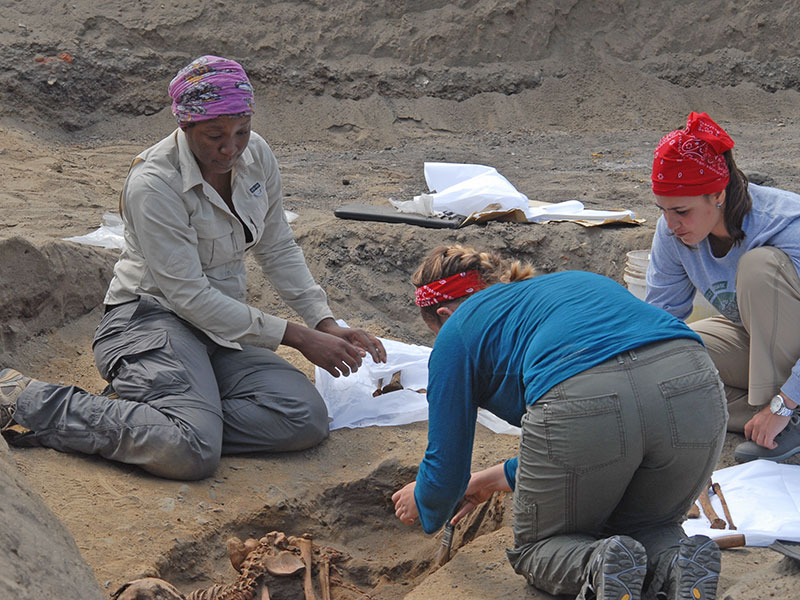
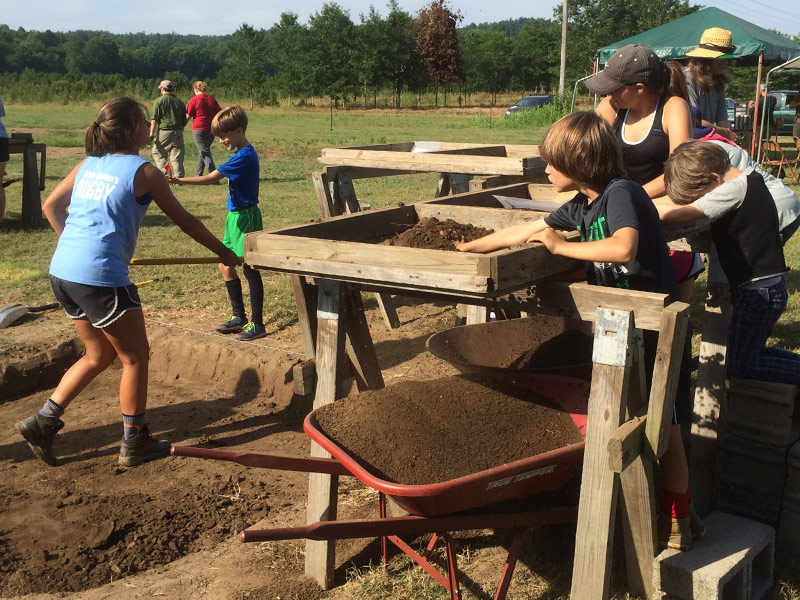
There are numerous opportunities for students who are interested in archaeology to receive training in excavation and laboratory techniques during the summer. Announcements for field schools can be found on the Bulletin Board in the 4th floor hallway of Dinwiddie Hall. In some years, the department offers its own field school, and an announcement about it is posted on the Bulletin Board on the 4th floor. See your major advisor about receiving credit for courses taken as part of a field school.
As a rule, you may earn up to 6-credits for Tulane field schools. Fieldwork taken through other universities typically transfers as 3 credits.
Students' Union
The Anthropology Students Union of Tulane (ASUT) was formed in 1997 as the undergraduate anthropology group of Tulane. ASUT has several goals it strives to fulfill. One goal is to educate the Tulane community about anthropology through events such as Anthro Week. Another goal is to provide information to anthropology majors about graduate schools and other opportunities. This is done using an e-mail listserv. Finally, ASUT strives to bring together the anthropology majors, graduate students, professors and staff through gatherings such as parties, picnics, and other events. In addition to these activities, ASUT also plans fundraisers, field trips and lectures throughout the academic year.
Kenneth J. Opat Fund for Undergraduate Research in Anthropology
The department has a special fund to support undergraduate research in anthropology. The Kenneth J. Opat Fund was established by the family and friends of the late Kenneth J. Opat, a distinguished anthropology major in the College of Arts and Sciences at the time of his death, with the primary purpose of encouraging undergraduate students in the conduct and reporting of original research in anthropology.
A variety of research expenses are eligible for support from the fund. Examples include travel to a research site or to a professional meeting to report on research or to confer with an expert on research plans; the purchase of research supplies, equipment, or library materials (equipment and books to be retained by the university on completion of the project); wages for informants, etc.
Priority is given to applications to support research for an anthropology honors thesis or for independent studies or other advanced courses in which a research project is involved. A competition for such grants is announced by the chair during the fall or spring semesters.
In the past, awards have been made for field work on "Skid Row" in New Orleans, the Houma Indians of Louisiana, Chicano mural artists in Los Angeles, and plastic surgeons in Great Britain and the U.S.; travel to the Smithsonian Institution to study projectile point collections; a study of the leaders of messianic movements in several parts of the world; a comparative study of markets in several towns in East Africa; a study of primate behavior at the Delta Regional Primate Center; and the classification of prehistoric bone implements in Louisiana.
Internships
A limited number of internships for undergraduate course credit are available to anthropology majors. Students interested in enrolling in such courses should consult with the departmental chair and Vincent Illustre in the Center for Public Service.
Prizes
The Department of Anthropology awards four prizes to graduating seniors on an irregular basis. The Victoria Reifler Bricker Award is given to the outstanding graduate for excellince in Linguistics. The Arden R. King Prize for Excellence in Anthropology is awarded to an outstanding senior. The Robert Wauchope Award is given to a senior anthropology major for a record of excellence in Anthropology. And the Elizabeth Watts Award is given to the outstanding graduate in Physical Anthropology.
Applying to Graduate School in Anthropology
Students who are interested in having a career in anthropology should consult with their major advisor and/or with a professor who specializes in the sub-field in which they wish to receive professional training. Copies of the Guide to Departments of Anthropology published by the American Anthropological Association (AAA) are kept in the department office. They may be checked out overnight from the chair. Furthermore, announcements about graduate programs in anthropology at other universities are posted on the bulletin board in the hall of the 4th floor in Dinwiddie Hall.
Most graduate programs in anthropology require three letters of recommendation from professors who are familiar with the student's academic work. Special forms are usually provided for this purpose, and they should be used in preference to the forms that are provided by the Career Planning and Placement Center in the University Center. The faculty of the department are happy to give advice and to serve as recommenders for students applying to graduate schools in anthropology (or for other professional degree programs).
Joint BA or BS and MA in Anthropology
Undergraduate majors in anthropology may be eligible to apply for the MA in Anthropology at Tulane in addition to their BA or BS. The joint BA or BS and MA in Anthropology is a program that is separate from the departmental doctoral program.
This joint program has the following requirements and conditions:
- the applicant must be an anthropology major;
- the applicant will have to apply for admission for a fifth year of course work in anthropology no later than the spring semester of the student's junior year;
- in accordance with Graduate School regulations, the applicant would need to have a minimum GPA of 3.0 to be considered for acceptance;
- the faculty of the department will determine the number of students to be admitted to this program each year, based on overall GPA, performance in the major, and the faculty's evaluation of each applicant's potential;
- upon acceptance into the program, the student will be assigned a faculty advisor whose expertise coincides with the student's interests;
- the student will be required to complete all of the normal major requirements for the BA or BS degree in Anthropology;
- the student will be required to take 126 credit hours at the undergraduate level, including two graduate level anthropology courses beyond those required for the major;
- twenthy-four (24) additional credit hours will be required at the graduate level in the fifth year for a non-thesis MA; students who choose the thesis option will be required to take eighteen (18) credits at the graduate level in the fifth year. In both cases, the student must take at least two 7000-level courses during the fifth year;
- the student will have to satisfy a graduate foreign language requirement and a statistics requirement for the MA (described in the "green sheet" for graduate students);
- students who are accepted into this program will not be in the doctoral program of the Department of Anthropology, and students who subsequently wish to pursue the Ph.D. in Anthropology at Tulane will have to apply separately to the departmental Ph.D. program.
- An application to the MA program with thesis must be accompanied by a letter from a faculty member, agreeing to serve as the advisor for the thesis.
- The graduate year of this MA program requires full-time registration (at least three courses each semester).
For further information about this joint BA or BS and MA in Anthropology, please consult with the departmental chair. |