Main Menu
Anthropology Home


Courses
 
Undergraduate Program
 
Graduate Studies
Degree Requirements
Regional Specialties
Graduate Students
Awards
Research Funds
Graduate Student Website
Courses
TASA
Application Information
 
Faculty and Staff
 
How to Contact Us
Colloquium Schedule
Links
Graduate Studies > Regional Specialties

South American Anthropology

The Department has been developing a nucleus of research and teaching in the anthropology of South America since 1991, and now has four full-time faculty members whose geographic specialties focus on that continent.

Intramural grants for graduate students working in South America are available. Anthropology graduate students are eligible to compete for dissertation feasibility funding from the Stone Center for Latin American Studies http://stonecenter.tulane.edu and the Anthropology Graduate Student Fund. Most anthropology graduate students currently working in South America have been supported at some point in their tenure in the program through one or more of these funding resources. Competitive intramural awards for participating in conferences are available from the Graduate Student Support Fund of the Graduate School.

Field opportunities in South America are available for graduate and undergraduate students through the Department of Anthropology.  For the latest information on field opportunities in anthropology contact the department office (+1-504-865-5336; scheval@tulane.edu).  If you are interested in field research related to a specific professor's interest or area, you may contact him or her directly for information on how you can become involved.

Library resources on South America have been increasing dramatically in the last several years within the Latin American Library of Tulane University http://lal.tulane.edu .

The faculty of the Tulane Department of Anthropology focusing on South America work in cultural anthropology, physical anthropology, and archaeology.

Professor William Balée carries out research on comparative ethnology, historical ecology, indigenous ethnobotany, and ethnohistorical studies of Tupí-Guaranian societies of the Amazon region, both in Brazil and Bolivia. Professor Balée is a founding member and officer of Society for the Anthropology of Lowland South America, also known as SALSA http://www.salsa-tipiti.org , and is now serving as President of that learned society and as a member of the editorial board of the society's journal, Tipití . The first meeting of SALSA took place in 2001 on the Tulane campus with sponsorship from the anthropology department and Tulane's Stone Center for Latin American Studies. Many Amazonianist papers were also presented at the Symposium on Neotropical Historical Ecology www.tulane.edu/~nei/conference.htm in October 2002, organized by Professor Balée, and supported with funds from the Neotropical Ecology Institute of Tulane. Students specializing in South America have participated in these events. Professor Balée is currently planning extended research on historical ecology and indigenous impacts on landscapes over time in the Atlantic Coastal Forest of southern Brazil in collaboration with Professor Cristina Adams of SENAC University (São Paulo), Dr. Nivaldo Peroni of the Federal University of Santa Catarina (Florianópolis, Brazil), and Msc. Adriana Felipim of the Center for Indigenous Work (São Paulo).

Professor Katharine Jack is a primatologist specializing in the behavioral ecology and conservation of New World primates. To date, Professor Jack's work in South American has focused on determining the conservation status of the Ecuadorian white-fronted capuchin monkey ( Cebus albifrons aequatorialis ) and she is currently establishing a long-term field study investigating the behavioral ecology of this species in the Bosque Protector Cerro Blanco http://www.planeta.com/planeta/02/0211eccerro.htm. Located just 16km outside the city of Guayaquil (Ecuador's largest city), this unique urban reserve is comprised of approximately 3500 ha. of dry tropical forest (one of the most threatened biomes on the earth). Very little is currently known about C. a. aequatorialis , which exists only in coastal Ecuador, and Professor Jack and her graduate students will apply the knowledge gained through their studies to assist in conserving this endangered primate.

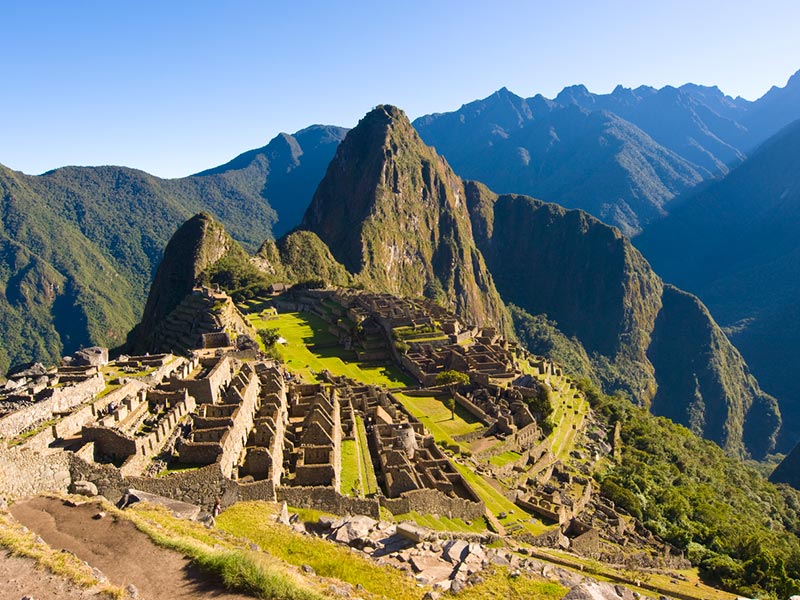
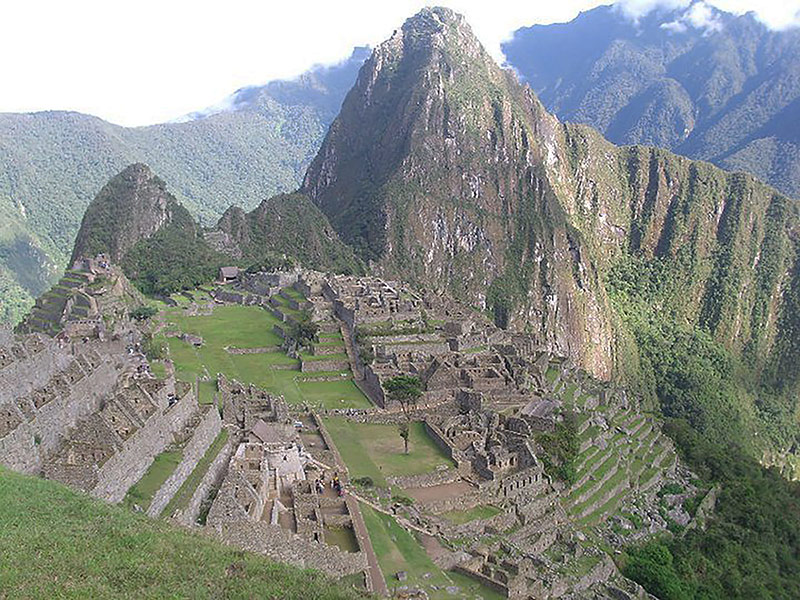
Professor Kit Nelson is an archaeologist specializing in human adaptation to arid environments and in the emergence of pottery production.  Her work includes archaeological research in central Peru and southern Egypt where she has long term research projects.  Dr. Nelson's Peruvian research is focused in the Huaura, Pativilca, and Fortaleza Valleys http://www. tulane.edu/~knelson1/fieldschool/index.htm. Her work includes both survey and excavation and is part of a larger multidisciplinary project, the Proyecto Arqueológico Norte Chico.  Her research focuses on the late Preceramic to Initial Period occupation in the Norte Chico region, an area with some of the largest Preceramic sites in Peru.  The project base, that includes research facilities for students, is in the town of Barranca, located on the central coast.  Dr. Nelson's work in Egypt is focused on the beginning of the Neolithic Period when pottery is first present.  Comparisons between these two desert areas on periods that represent the transition to more settled lifeways and to the integration of plant domestication adds a multiregional perspective to understanding human adaptation in these arid environments.

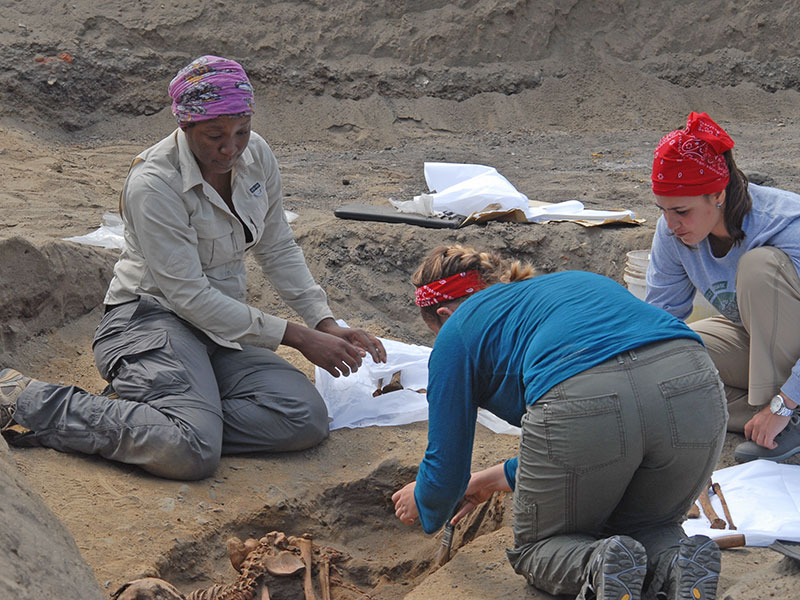
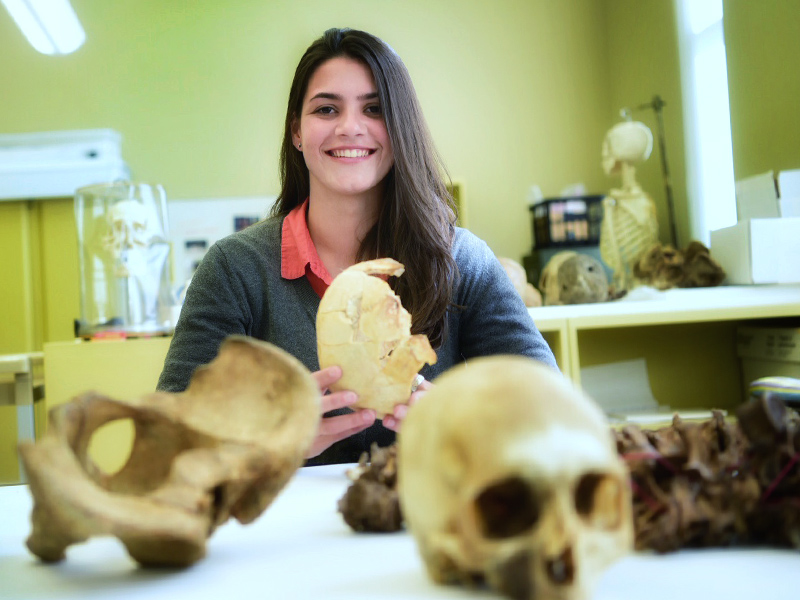
Professor John Verano , since 1983, has centered his research on the physical anthropology and paleopathology of prehistoric Andean populations, with a particular focus on the north coast of Peru. His specific interests include disease in ancient skeletal and mummified remains, trepanation and other evidence of ancient surgery, and warfare, human sacrifice, and mortuary practices in Andean South America. Since 1995 he has been collaborating with two major Peruvian archaeological projects on the north coast: the El Brujo Archaeological Project http://www.unitru.edu.pe/arq/caov.html and the Huaca de la Luna Archaeological Project http://www.unitru.edu.pe/arq/museount.html. Professor Verano has analyzed human skeletal and mummified remains recovered from their excavations and he has assisted in the excavation of burials at both sites. In the summers of 2000 and 2001, he returned to more hands-on fieldwork, directing the excavation of a human sacrificial site at the Huaca de la Luna, with major funding from the National Geographic Society. During the summer of 2003 he began a new research project analyzing the remains of approximately 200 victims of a Late Intermediate Period (c. A.D. 1300) mass execution at Punta Lobos in the Huarmey Valley, in collaboration with the director of the Punta Lobos Project, Lic. Hector Walde.

Recent dissertations (since 2000) and current dissertation projects by Tulane anthropology graduate students working in South America are as follows:

Student Dissertation Title Ph.D. Date
Loretta Ann Cormier

The ethnoprimatology of the Guajá Indians of Maranhão, Brazil

May 2000
Mary Riley

Measuring the biomedical efficacy of traditional remedies among the Makushi Amerindians of Southwestern Guyana

Aug 200
Javier Ruedas

The Marubo political system

May 2001
Cassandra White

Cultural aspects of leprosy treatment in Rio de Janeiro, Brazil

May 2001
Catherine M. Gaither  

A Growth and Development Study of Coastal Prehistoric Peruvian Populations

Dec 2004
Meredith Dudley

The historical ecology of the Bolivian Lecos: Landscape dynamics and identity transformation at the intersection of the Andes and the Amazon

in progress
Laurel Hamilton 

Human Sacrifice on the Pre-Columbian North Coast of Peru

May 2006
James R. Welch

Xavante young adults and environmental practice at Etéñitepa

in progress


News and Events
New WebSite Launched
We are pleased to introduce our new website design. Please explore and give us feedback on what you think!

Anthropology Home      Links      Contact      Tulane University
Anthropology at Tulane University | 7041 Freret Street , Tulane University, New Orleans, Louisiana 70118
504) 865-5336 , (504) 865-5338 (Fax)