Faculty of the Department of Anthropology
William Balée (Ph.D. Columbia 1984)
Professor
Sociocultural anthropology with a focus on Amazonia and Brazil . Theoretical and topical interests emphasize, respectively, historical ecology and ethnobiology. Ethnographic fieldwork with the Ka'apor, Guajá, Araweté, Tembé, Assurini do Xingu peoples of eastern Amazonian Brazil and the Sirionó people of the eastern Bolivian Amazon. Courses taught cover ecological anthropology, historical ecology of Amazonia , South American ethnology, kinship systems, cognitive anthropology, and ethnographic research design.
wbalee@tulane.edu
405 Dinwiddie Hall
(504) 862-3055
Marcello A. Canuto (Ph.D. Pennsylvania 2002)
Associate Professor
Director, Middle American Research Institute
Archaeology, social organization, theory, settlement patterns, epigraphy, iconology; Mesoamerica
mcanuto@tulane.edu
310 Dinwiddie Hall
(504) 862-3104
Nathalie Dajko (Ph.D. Tulane 2009)
Assistant Professor
Linguistics; sociolinguistics, language death, pidgins and creoles. Louisiana French
ndajko@tulane.edu
www.tulane.edu/~ndajko
109 Dinwiddie Hall
(504) 862-8338
Shanshan Du (Ph.D. Illinois 1999)
Associate Professor
Cultural Anthropology, Gender, Ethnicity; China , East Asia, Southeast Asia
sdu@tulane.edu
402 Dinwiddie Hall
(504) 862-3047
Dan M. Healan (Ph.D. Missouri 1973)
Professor
Mesoamerican archaeology, particularly Central and Western Mexico. Theoretical and analytical specialties include urbanism, household organization and production, lithic technology, and quantitative methods. Prior and ongoing research at the Early Postclassic city of Tula, Hidalgo and investigation of prehispanic settlement and obsidian exploitation in the Ucareo/Zinapécuaro region of Michoacan. Courses taught include basic statistics, quantitative analytical methods in archaeology, lithic analysis, and Highland Mexican prehistory.
healan@tulane.edu
418 Dinwiddie Hall
(504) 862-3051
Robert M. Hill II (Ph.D. Pennsylvania 1980)
Professor
Cultural anthropology, cultural dynamics, ethnohistory; Middle America, North America
At the most general level, my research attempts to refine our understanding of how the ancient Maya became the modern Maya, particularly in the face of so many Spanish and later, national institutions designed to change them into some other people. I carry out my research in the highland region of Guatemala for several reasons. First, it was an under-studied area when I was in graduate school. Second, there are tremendous continuities from the late preconquest period in many aspects of culture. Third, the documentary record is extensive and, again was under-utilized when I began my work.
I have been fortunate enough to have undertaken ethnographic, archaeological and ethnohistoric research in the region. For the last 20 years or so my focus has been ethnohistorical, using both Spanish colonial and indigenous documents to learn more about both the late preconquest and colonial periods. I have also followed up archaeological leads derived from the documents in the form of surveys in the Department of El Quiche and Guatemala .
My major publications reflect this wide range of research. My books include the Traditional Pottery of Guatemala (with my mentor, Ruben E. Reina); Continuities in Highland Maya Social Organization: Ethnohistory in Sacapulas, Guatemala (with John Monaghan); The Pirir Papers and other colonial-period, Cakchiquel-Maya Testamentos; and Colonial Cakchiquels: Highland Maya Adaptations to Spanish Rule, 1600-1700. I am currently collaborating with Professor Judith Maxwell on translations of the major Cakchiquel chronicles, written down in Spanish characters early in the colonial period.
rhill@tulane.edu
401 Dinwiddie Hall
(504) 862-3050
Trenton W. Holliday (Ph.D. New Mexico 1995)
Professor
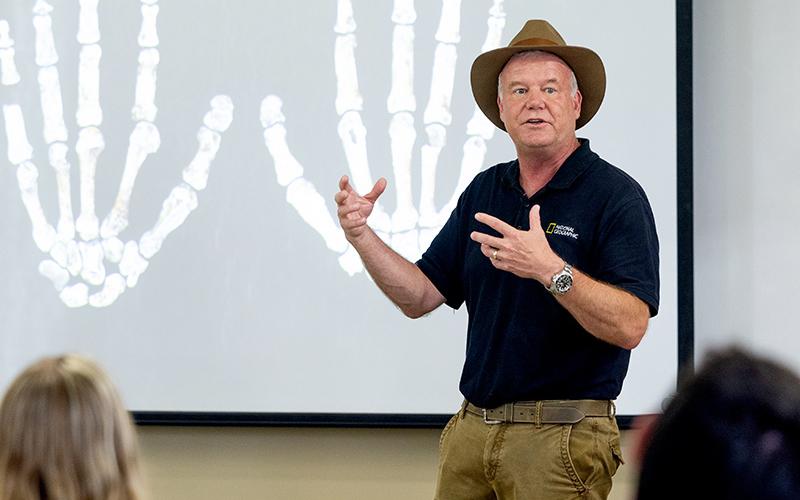
Trenton Holliday is a paleoanthropologist/human paleontologist who specializes in Late Pleistocene human evolution. Research interests include examining evolutionary changes in body size and shape among fossil hominids, recent humans, and extant nonhuman hominoids. Ongoing research involves assessing differences in limb proportions related to climatic adaptation and/or locomotion, as well as inferring phylogenetic relationships from postcranial and cranial metrics. Courses taught are Human Origins, Adaptation and Human Variability, The Neandertal Enigma, Human Evolution, and Human Functional Morphology.
thollid@tulane.edu
Trenton Holliday's Home Page http://www.tulane.edu/~twhollid/webthing.html
417 Dinwiddie Hall
(504) 862-3065
Katharine M. Jack (Ph.D. Alberta 2001)
Associate Professor
Primate behavior ecology, Costa Rica
Most broadly, my research focuses on the behavior, ecology, and conservation of neotropical primates with a specific focus on capuchin monkeys (Cebus.) in Costa Rica and Ecuador. In Costa Rica I work collaboratively with Dr. Linda Fedigan (University of Calgary, Anthropology) at Santa Rosa National Park (Area de Conservacíon Guanacaste), where I study relationships among male white-faced capuchins (Cebus capucinus) and how these relationships are influenced by patterns of dispersal and ecological variables. My work in Ecuador currently focuses on the conservation of Cebus albifrons aequatorialis, an endangered subspecies endemic to coastal Ecuador, and my graduate students and I am are in the process of establishing a long-term study examining the behavioral ecology of C. a . aequatorialis in Bosque Protector Cerro Blanco. Both Santa Rosa and Cerro Blanco are comprised of tropical dry forest habitat and in the future I plan to compare the data that my students and I gather on these two species of capuchins in order to address larger questions in primate behavioral ecology..
kjack@tulane.edu
Katharine Jack's Home Page http://www.tulane.edu/~kjack/
416 Dinwiddie Hall
(504) 862-8905
Adeline M. Masquelier (Ph.D. Chicago 1993)
Professor and Chair
Cultural anthropology, religion, medicine, gender; West Africa
amasquel@tulane.edu
Adeline Masquelier's Home Page http://www.tulane.edu/~MasquelierIndex
414 Dinwiddie Hall
(504) 862-3594
Judith M. Maxwell (Ph.D. Chicago 1982)
Professor; Coordinator, Interdisciplinary Program in Linguistics
Linguistics, Mayan languages, discourse; Mesoamerica , Guatemala
I work on discourse primarily within Mayan languages, particularly those of the K'iche'an and Q'anjob'alan families. Questions that interest me within discourse are canons for artistry, encoding of cultural constructs, mechanisms of coherence, co-reference and tracking, knowledge and belief states, presuppositions, creating and indexing societal relationships, alignments, animacy hierarchies in relationship to syntactic and pragmatic structures, and masking. I also work with contemporary language issues: the processes of standardization, language maintenance and shift, bilingual/multicultural education, and issues of language, identity and authenticity.
I work with colonial manuscripts, primarily in Kaqchikel and in Nahuatl, exploring issues in language change, borrowing and restructuring in conditions of contact, and lexical embellishment and shift. I also work with regional varieties of English, again looking at issues of language, power and identity. The performance of gender provides another arena for research both within English and cross-linguistically. I am interested in the mechanics of how language works and in what it works to do. Kaqchikel, Chuj, Nahuatl and English provide my primary data, but all languages are fair game.
maxwell@tulane.edu
Judith Maxwell's Home Page http://www.tulane.edu/~maxwell
413 Dinwiddie Hall
(504) 862-3046
Grant S. McCall (Ph.D. Iowa 2006)
Associate Professor
Archaeology, Early and Middle Stone Age; Old World.
gmccall@tulane.edu
107 Dinwiddie Hall
(504) 862-3054
Jason S. Nesbitt (Ph.D. Yale 2012)
Assistant Professor
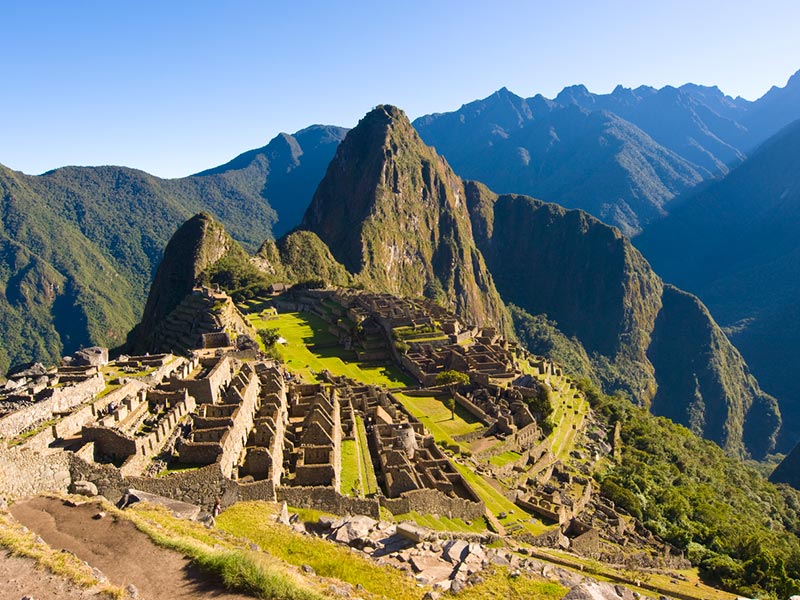
Archaeology, Andean prehistory, early complex societies, monumental architecture, urbanism,
archaeological theory, relationships between culture and nature, ceramic anaylsis, remote sensing applications to archaeology; Peru
jnesbitt@tulane.edu
408 Dinwiddie Hall
(504) 862-3052
Olanike Ola Orie (Ph.D. British Columbia 1995)
Associate Professor
Theoretical linguistics, phonology, morphology, African languages; Africa
My research interests are focused on phonology, prosodic morphology, first language acquisition and comparative Yoruba/Benue-Congo linguistics. My recent work includes papers on minimal words, cross-Yoruba syllable patterns, Yoruba names and gender marking, and vowel harmony in Benue-Congo languages. My other research interests include: (i) Yoruba minimal words and vowel processes (with Douglas Pulleyblank, University of British Columbia ) and (ii) Child Yoruba vowel asymmetries (with David Ingram, Arizona State University )
Another area of strong interest is the phonology and prosodic morphology of Yucatec Maya. In collaboration with Victoria R. Bricker ( Tulane University ), my recent work has focused on the honology of laryngeal consonants and its effect on syllabic and morphological structures.
oorie@tulane.edu
404 Dinwiddie Hall
(504) 862-3062
Marc D. Perry (Ph.D. U Texas, Austin 2004)
Assistant Professor of Anthropology and African and African Diaspora Studies (coming to Tulane July 2010)
African Diaspora and black transnationalism, comparative racializations in Latin American, the Caribbean, and the U.S., Identity politics/social movements
neoliberal subject formation, Afro-Atlantic music and performative culture, racial formation and transnational migration, Cuba
mperry3@tulane.edu
409 Dinwiddie Hall
(504) 862-3053
Christopher B. Rodning ( Ph.D. North Carolina-Chapel Hill 2004 )
Associate Professor
I am interested in relationships between people and place as they are reflected in archaeological evidence of architecture, burials and mortuary ritual, and settlement patterns. Another topic in which I have been and am interested is the archaeology of gender. Several recent and current projects also relate to the broader topic of culture contact, specifically between Europeans and native peoples of the southern Appalachians , an area in which I have been and am currently doing archaeological research.
I have concentrated on the cultural history of native peoples in eastern North America, and especially on the archaeology of North Carolina , through fieldwork and through the study of extant archaeological collections.
crodning@tulane.edu
Chris Rodning's Home Page http://www.tulane.edu/~crodning/
407 Dinwiddie Hall
(504) 862-3067
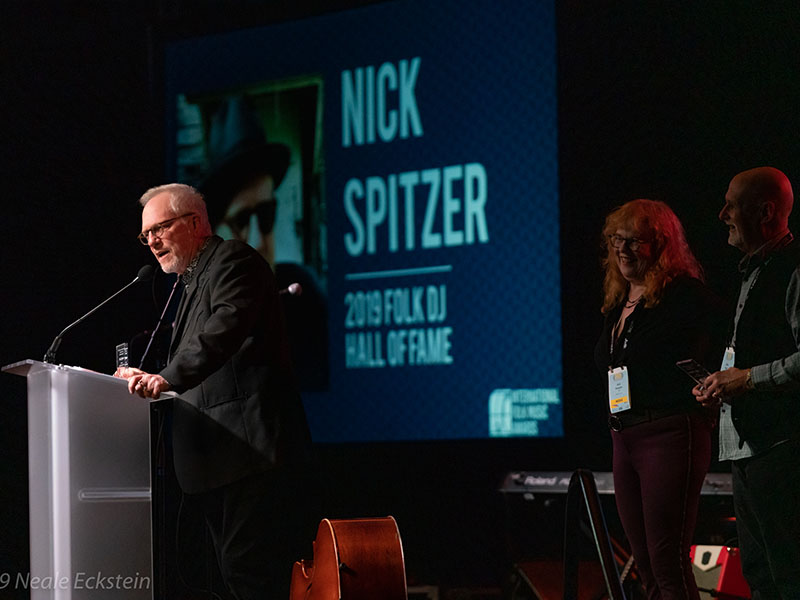
Nicholas R. Spitzer (Ph.D. U Texas, Austin 1986)
Professor of Anthropology and American Studies
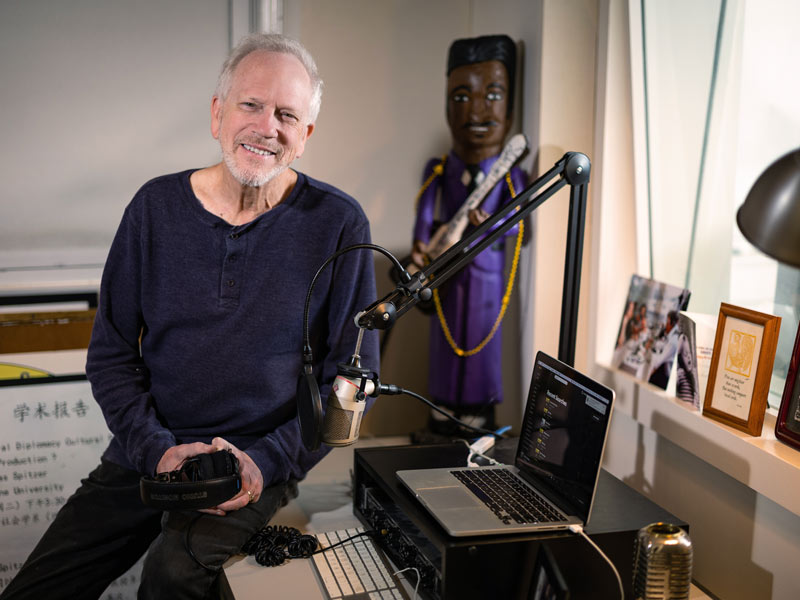
Folklore; ethnography, American vernacular music/culture
nspitzer@tulane.edu
http://americanroutes.wwno.org/staff/205/nick-spitzer
202 Dinwiddie Hall
(504) 862-3060
Allison J. Truitt (Ph.D. Cornell 2005)
Assistant Professor
Sociocultural anthropology, economic transformations, money and other means of circulation; cities, consumption, and globalization; Southeast Asia, Vietnam.
atruitt@tulane.edu
410 Dinwiddie Hall
(504) 862-3058
John W. Verano (Ph.D. California-Los Angeles 1987)
Professor
Physical anthropology, skeletal biology, paleopathology, forensic anthropology, Peru.
verano@tulane.edu
John Verano's Home Page http://www.johnverano.com
110 Dinwiddie Hall
(504) 862-3049
Ana Servigna (Ph.D.
Visiting Assistant Professor
aservign@tulane.edu
106 Dinwiddie Hall
Marc Zender (Ph.D. Calgary 2004)
Visiting Assistant Professor
Mesoamerican indigenous languages and writing systems (epigraphy); anthropological and historical linguistics; Maya archaeology; comparative writing systems; iconography and visual culture
mzender@tulane.edu
301c Dinwiddie Hall
(504) 862-3100
Emeritus Professors
E. Wyllys Andrews V (Ph.D. Tulane 1971)
Professor Emeritus
Director, Middle American Research Institute 1975-2009
Archaeology of Mesoamerica, especially the Maya area, with field research in El Salvador (Quelepa), Guatemala (Seibal), Honduras ( Copan ), and Yucatan (Dzibilchaltun, Komchen). Analytical specialties include ceramics, architecture, households, and settlement patterns. Studies of the spread and diversification of Formative settlement in eastern Mesoamerica , with emphasis on early ceramics, and of relationships between the Maya and Olmec during the Middle Formative. Excavations in the 1990s in a residential group in the royal compound at opan , focusing on diversity and spatial integration of elite segments of Maya society. Analysis and publication of the Copan project continues.
wandrews@tulane.edu
Harvey M. Bricker (Ph.D. Harvard 1973)
Professor Emeritus
Research and publishing interests lie in two totally disjunctive areas--French Palaeolithic archaeology and Maya archaeoastronomy.
hbricker@tulane.edu
Victoria R. Bricker (Ph.D. Harvard 1968)
Professor Emerita
Cultural anthropology, ethnohistory, language and culture, Maya hieroglyphics; Middle America
vbricker@tulane.edu
Anthropologists in Other Departments
Carl Kendall
Professor; Director of Center for Global Health Equity
School of Public Health and Tropical Medicine
Applied Medical Anthropology, Health Disparities, Monitoring and Evaluation, International Public Health Capacity Building, RDS
ckendall@tulane.edu
http://www.sph.tulane.edu/main/academics/fackeyword.htm?Action=Detail&id=69
Richard Marksbury (Ph.D. Tulane 1979)
Dean, School of Continuing Studies and Summer School
Associate Professor, Asian Studies
Director, Asian Studies Program
Cultural anthropology, Oceania, South Asia, caste systems, cultural change, land tenure, marriage
rmarksby@tulane.edu
|